


Why Most Hotel Marketing Budgets Quietly Fund OTA Growth (And How to Reclaim It)
- Carly Spicer
- Apr 29
- 7 min read


The strongest hotel marketing budgets defend something specific: the moments that make a property worth booking direct. Architecture begins where atmosphere ends.
In 2026, the hotels that grow profitably will not be the ones that spend more on marketing, they will be the ones whose marketing is structured to retain demand rather than release it.
For most independent hotels and luxury hospitality groups, the conversation about OTA dependency has become familiar. Commission rates are high. Direct bookings are valuable. Reducing reliance on third-party platforms is desirable. The strategic intent is rarely the issue.
The issue is structural. Most hotel marketing budgets are quietly engineered to subsidise the very intermediaries they are trying to compete with. The channels are not the problem. The architecture between them is.
This is the part of hospitality marketing strategy that gets discussed least and matters most. Channel mix determines occupancy. Channel architecture determines margin.
The Hidden Subsidy in Most Hotel Marketing Budgets (Why Direct Booking Strategy Fails Quietly)
Hotel marketing rarely fails in obvious ways. Campaigns run. Impressions arrive. Bookings come through. Revenue is reported. The failure is structural, not visible in any single dashboard.
When a guest sees a paid social ad, searches the hotel name, clicks an OTA listing in the search results and books through Booking.com, the hotel pays twice. Once to generate the demand, and again in commission on the booking. The first cost sits in the marketing line. The second sits in the distribution line. Neither department typically sees the full picture, because the two costs are reported separately and reconciled rarely.
This is the invisible subsidy. Most hotel marketing budgets are partially funding OTA acquisition without intending to. The fix is not cutting paid media. The fix is structuring the channel mix so that demand created by the property is captured by the property.
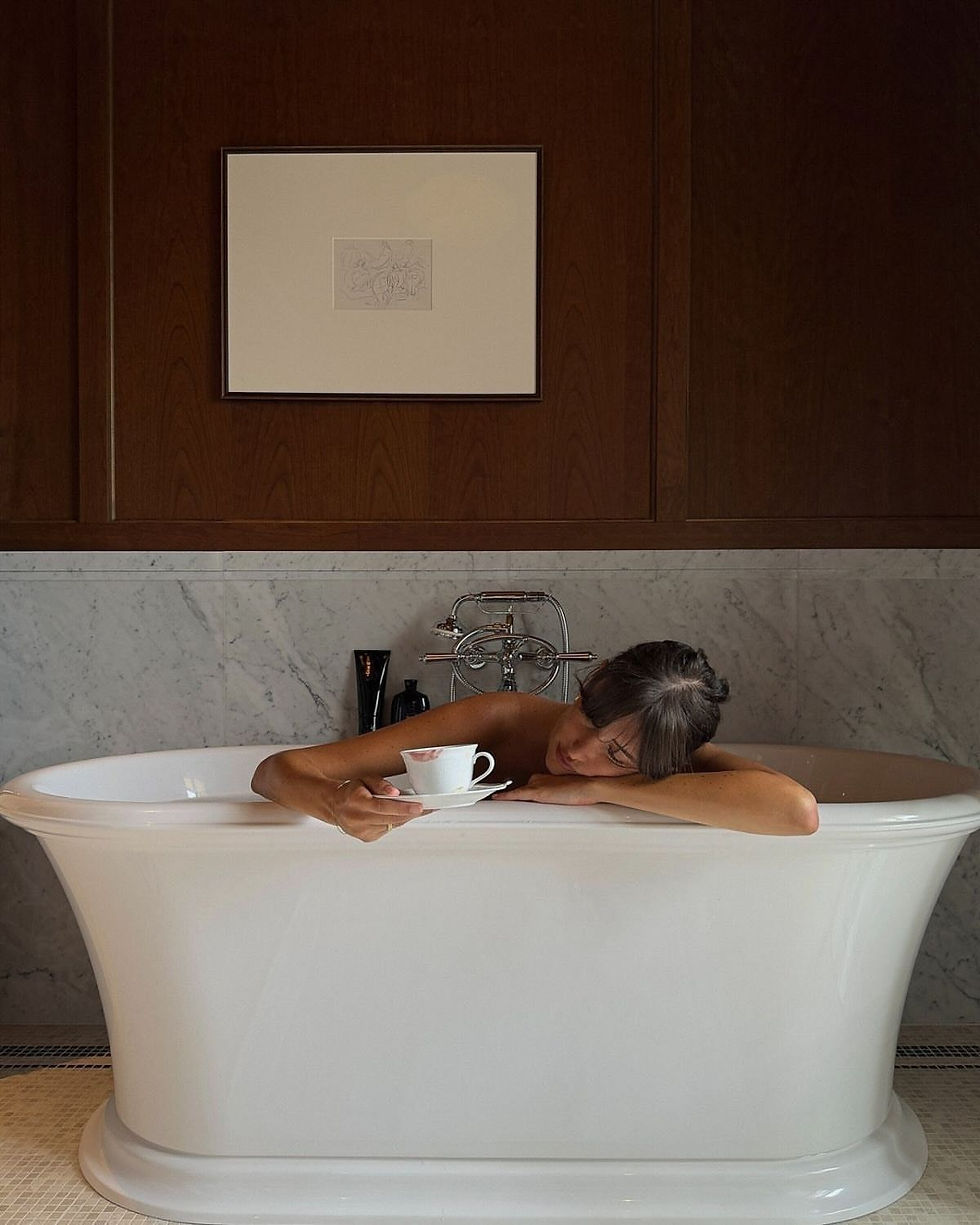
Most hotel marketing budgets leak revenue at the points where channels meet. The reception, the booking engine and the search result are all part of the same architecture.
Why Channel Architecture Matters More Than Channel Choice (Strategic Context)
The conventional framing of hotel marketing splits channels into paid and organic, branded and non-branded, top-funnel and bottom-funnel. These distinctions are useful for reporting. They are insufficient for allocation.
The more important distinction is whether each channel is set up to retain demand or release it. A paid search campaign that ranks above OTAs for branded queries retains demand. The same campaign without that protection releases it. A meta-search bid that drives a guest into the OTA listing rather than the direct booking path releases demand. SEO content that ranks for high-intent queries linked to the booking engine retains demand. Social content that ends in a generic landing page releases it.
The channels themselves are neutral. The architecture decides the outcome.
The Four Points Where Direct Booking Margin Leaks
Across most independent hotels and boutique groups, four leaks recur. They are rarely large individually. Together, they routinely cost between 15 and 25 percent of total direct booking potential.
Unprotected Branded Search
If a hotel does not actively bid on its own brand terms, OTAs almost certainly do. The cost of bidding on your own name is small. The cost of not bidding is paying commission on guests who were already searching for you specifically. This is the cheapest insurance available against unnecessary distribution cost, and the line most often missing from underperforming budgets.
Meta-Search Misalignment
Meta-search platforms such as Google Hotel Ads, TripAdvisor and Trivago can deliver direct bookings or feed OTAs, depending on how bids and rate parity are managed. Without active management, default behaviour favours OTAs because their bidding infrastructure is more sophisticated and their rate parity agreements are more aggressively enforced.
Content Without Commercial Endpoints
Editorial content, social media and PR build awareness. They do not convert unless they are structurally linked to a booking journey. A high-performing Instagram account that drives traffic to a homepage with no clear booking pathway is a brand asset, not a revenue asset. Both can be true. The two should not be confused.
A Website Built for Browsing Rather Than Booking
The most expensive line in any hotel's marketing P&L is often the cost of poor conversion. If a website averages a 2 percent conversion rate where 4 percent is achievable, marketing is being asked to deliver twice the traffic to produce the same revenue. This is rarely a marketing problem. It is almost always an asset problem.
What a Margin-Positive Hotel Marketing Budget Actually Looks Like
A 2026 hotel marketing budget that defends margin rather than subsidising distribution has three structural characteristics.
It Treats SEO as Foundation, Not Addition
Organic visibility for high-intent queries is the only acquisition channel where cost does not scale linearly with bookings. For independent and luxury properties, ranking for queries such as boutique hotel [city], spa hotel [region] and wedding venue [area] compounds in value over time. SEO is the channel OTAs cannot easily outbid, because the asset being competed for is the website itself, not the auction.
It Funds Brand Search Defence as a Non-Negotiable Line
Bidding on branded terms is not a discretionary spend. It is the cheapest insurance available against unnecessary commission. Hotels that deprioritise this line consistently underperform their occupancy potential by margins that exceed the cost of the line several times over.
It Treats the Website as a Revenue Asset, Not a Brochure
Conversion rate optimisation, booking engine performance, mobile experience and rate transparency are not website projects. They are commercial projects with marketing implications. A 1 percent improvement in conversion rate often returns more than a 20 percent increase in paid media spend.
These three characteristics do not eliminate OTA dependency. They make it strategic rather than structural. OTAs remain valuable for reach and discovery, particularly into international markets. The point is not to remove them. The point is to stop paying them twice.

In hospitality, marketing infrastructure is no different to operational infrastructure. Both reward the brands that build for retention rather than reach.
The Commercial Logic of Reducing OTA Reliance
Hotels that grow direct bookings sustainably do not do so by spending more. They do so by spending in a different shape.
A property that shifts 5 percent of its budget from generalised paid social into branded search defence, organic content and conversion infrastructure typically sees direct bookings rise within two quarters. The total spend has not changed. The architecture has.
This is the work that sits underneath the more visible decisions about channels, campaigns and creative. It is also the work that determines whether marketing is a cost centre or a margin engine.
How to Audit Your Hotel's Channel Architecture
If you are reviewing how your hotel or hospitality group's marketing budget is structured across a single property or a portfolio, five questions surface most leaks quickly:
Are you bidding on your own branded search terms, and if so, are you outranking OTAs for your hotel name?
Do your meta-search bids favour your direct booking engine, or do they default to OTA listings with higher bid budgets?
Does every social, content and PR touchpoint terminate in a clear booking journey, or in a generic homepage?
What is your booking engine conversion rate, and when was it last benchmarked against the achievable range for your property type?
How is OTA commission cost reconciled against marketing spend, and which department holds accountability for the combined number?
These five questions are deliberately not about creative, campaigns or channels. They are about structure. The answers usually reveal where margin is leaking and where it can be reclaimed without additional spend.
Frequently Asked Questions
How can hotels reduce OTA reliance without losing visibility?
Reducing OTA reliance is not about removing OTAs. It is about restructuring the marketing channel mix so that demand created by the hotel is captured by the hotel rather than intercepted by intermediaries. This typically involves protecting branded search, aligning meta-search bids with direct booking pathways, ensuring content terminates in commercial endpoints and improving website conversion. Most hotels see direct booking growth within two quarters when these four areas are addressed in combination.
What percentage of a hotel marketing budget should go to direct booking strategy?
There is no fixed percentage that applies to every property. As a structural principle, hotels should prioritise three lines as non-negotiable before allocating discretionary spend: branded search defence, organic search infrastructure and booking engine conversion optimisation. These three lines often account for 25 to 40 percent of an effective hotel marketing budget. The exact figure depends on positioning, occupancy targets and seasonality.
Why do hotel marketing budgets quietly fund OTAs?
Most hotel marketing budgets fund OTAs unintentionally because marketing and distribution costs are reported separately. When a paid social ad creates demand that converts through an OTA listing, the hotel pays both the acquisition cost and the commission. Without integrated reporting, neither department sees the full picture, and the channel architecture continues to favour intermediaries. The fix is structural rather than tactical.
What is the difference between channel mix and channel architecture?
Channel mix refers to how a budget is distributed across channels such as SEO, paid search, social media and email. Channel architecture refers to how those channels work together to retain or release demand. Two hotels can have identical channel mixes and produce very different commercial outcomes, depending on whether their channels are structured to capture demand for the property or to feed it to intermediaries.
How do luxury hotels approach direct booking strategy differently?
Luxury hotels and boutique hospitality groups typically rely on direct bookings for a higher proportion of revenue, partly because their guest profile values discretion and personalised experience, and partly because their margin structure is more sensitive to OTA commission. Luxury hospitality marketing tends to weight SEO, brand content and conversion infrastructure more heavily than transactional paid media, and treats the website as the primary brand and revenue asset rather than a supporting channel.
Key Takeaway
Hotel marketing in 2026 is no longer a question of how much to spend. It is a question of whether the structure of that spend retains demand or releases it. The channels themselves are neutral. The architecture between them decides whether marketing is a cost centre or a margin engine.
The hotels that compound revenue over time are not the ones spending most aggressively. They are the ones whose marketing infrastructure is built to capture the demand it creates.
If You're Building for 2026
If your hotel or hospitality group's marketing currently feels active but produces inconsistent direct booking growth, the issue is unlikely to be effort or creative. It is almost always structural.
At JUDE, we approach hotel and hospitality marketing as channel architecture, aligning SEO, paid media, content and conversion infrastructure into one cohesive system. Because in hospitality, marketing should not only generate demand, it should retain it.


Comments